
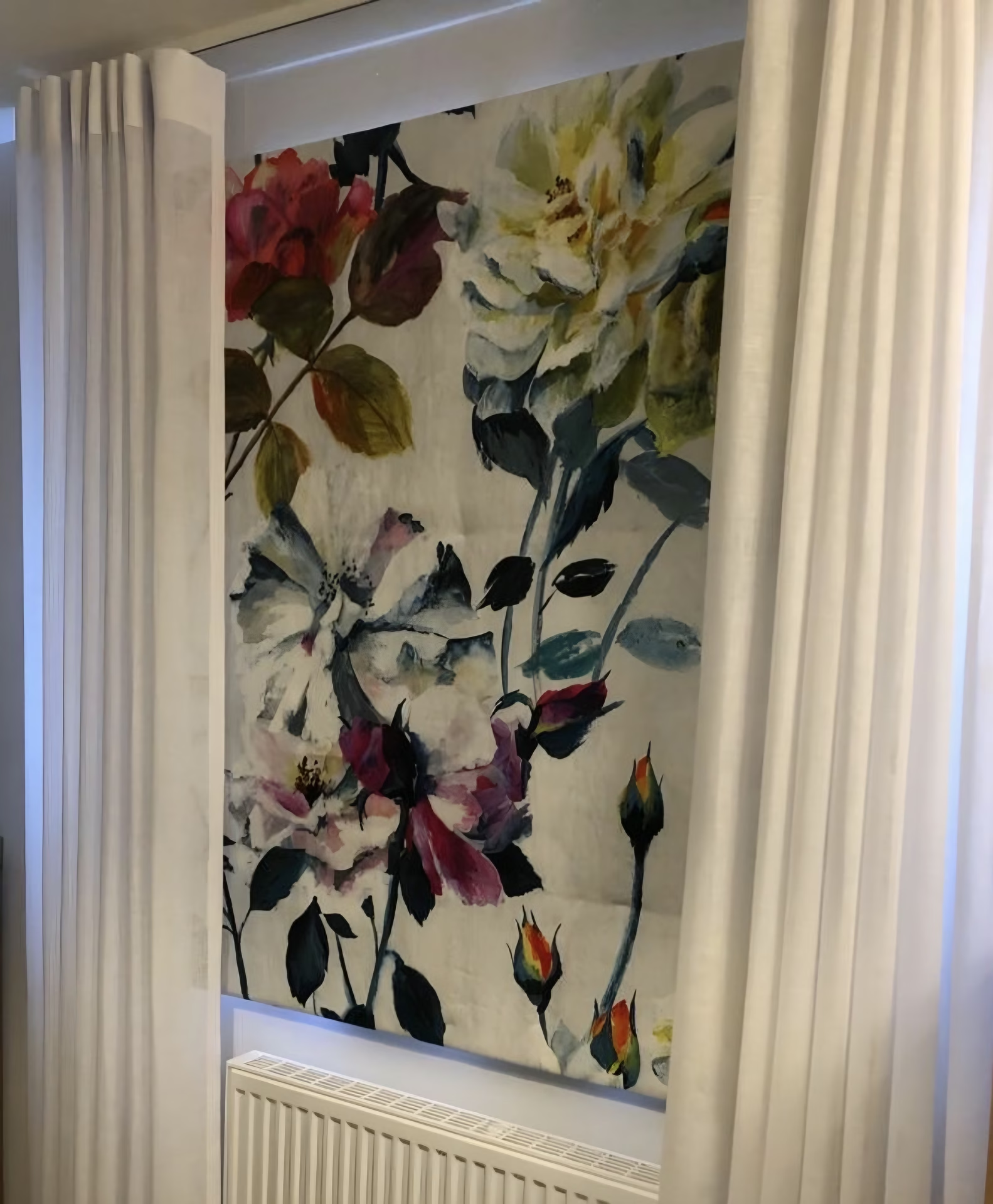
Curtains and upholstery for Suffolk's timber-framed houses
A window that leans, a beam set low, a floor that slopes: the old houses over the Stour ask for careful measuring and the right cloth. The workshop sits near Maldon in Essex, with Sudbury silk in its pattern books.
Yes. Simon Houlding Upholstery takes on work across the south of Suffolk, from a workshop in Heybridge, near Maldon in Essex, the next county south over the Stour. The drive to Sudbury is about 41 minutes, and to Ipswich about 47 minutes. Reupholstery, curtains, blinds and shutters are all made by the workshop's own team, and the measuring and fitting is done by them too. You can read the 162 five-star reviews before you call.
Measuring a Suffolk window that leans
A timber-framed house keeps its own rules, and each one changes how a curtain or blind is cut and hung.
-
1
A window out of square
wider at the top than the foot
The houseAn opening in old oak rarely has two sides the same. The frame has moved over centuries, so a window can be wider at the top than the bottom, and a blind cut to the top width leaves a gap at the sill.
What we makeOur fitter measures each reveal on its own and makes a roman blind to the width the window truly is, checked by two makers before a single cut.
-
2
A beam above the window
no room for a pole
The houseIn a low room a beam often runs just above the opening, leaving no clear height for a pole or a track and no wall to stack a curtain back onto. A full pair simply will not fit.
What we makeA roman blind set close under the beam shows a pattern well and clears the glass. Ours are made in the workshop, lined and interlined.
-
3
A small casement in a thick wall
set deep, or under the eaves
The houseMany casements are small, set in walls a foot or more thick, or tucked under the eaves where the ceiling drops. The deep reveal gives little to fix into and crowds a heavy heading.
What we makeA blind made to the reveal, or shutters fitted to the shape of the opening, keep the line of the glass and leave the room its light.
-
4
A floor that slopes
level to the eye, not the spirit level
The houseThe floor in an old house rarely runs true, so a curtain cut level by the spirit level hangs crooked to the eye. What looks right matters more here than what the level says.
What we makeA curtain here is hung to the eye, each drop dressed so that it reads straight against a sloping floor and a settling frame.
-
5
Draughts and old glass
cold off the panes, movement with the seasons
The houseThin old glass lets the cold fall into the room, and draughts come in round the leading. The frame swells and shrinks with the seasons, so a fixing wants care in soft oak and plaster.
What we makeOur curtains are lined and interlined as standard, which adds a layer at the glass and holds warmth through the evening.
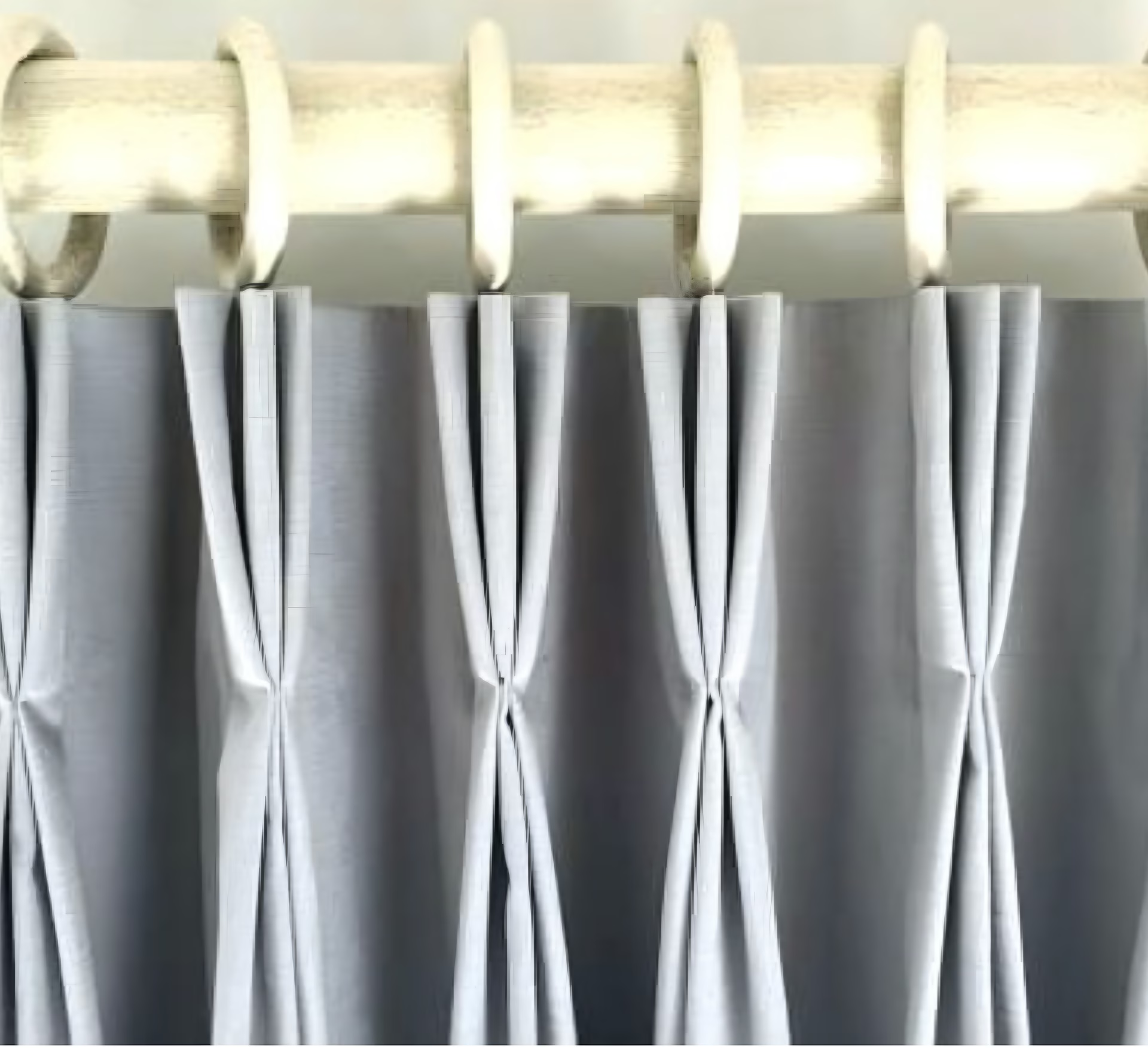
Sudbury silk, from a Suffolk mill
Sudbury sits in a loop of the Stour, where Thomas Gainsborough was born in 1727 and where silk has been woven for more than two hundred years. Several mills still weave in the town. Silk drapes and takes colour as no other cloth does.
Gainsborough Silk, founded in 1903 at Sudbury, is one of Britain's last jacquard weaving mills, with a Royal Warrant since 1981. Its books sit in the pattern-book room at the workshop, to turn the pages in person or have brought to you. Silk suits a quiet chair or a bedroom, lined and interlined against the sun, and not a family sofa. The silks in the online library are easier to browse from home.
Suffolk towns, and what their houses ask
Sudbury, Long Melford, Lavenham
Wool and silk towns, full of timber-framed houses that lean and settle. Lavenham has its crooked High Street and Guildhall; Long Melford its very long main street. Low beams and short drops ask for a blind rather than a full curtain.
Hadleigh, Nayland and the Dedham Vale
Hadleigh grew rich on wool cloth, and Nayland, Stoke-by-Nayland and Bures sit on the Stour. East Bergholt, where John Constable was born, and Flatford lie in the vale. Limewashed fronts and small casements want cloth kept light and simple.
Ipswich, Woodbridge, Felixstowe
Ipswich is the county town on the Orwell, with streets of Victorian and Edwardian houses and tall sashes. Woodbridge sits on the Deben by its Tide Mill; Felixstowe is Edwardian seaside. Generous windows take a fuller, lined curtain.
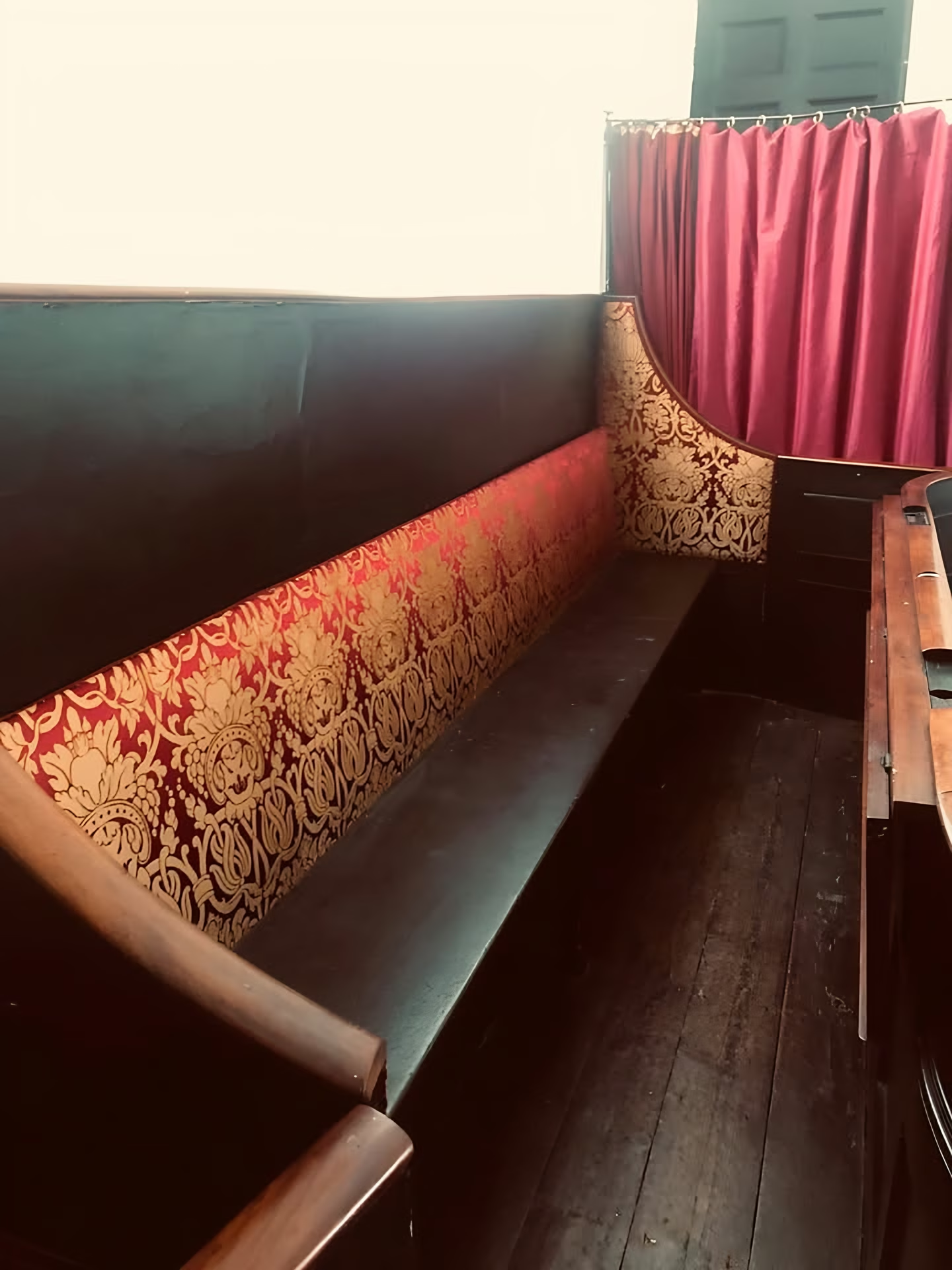
What an old Suffolk house asks of the work
A listed house wants fixings made with care, into oak and plaster that have settled over centuries. Many of the houses over the Stour are listed, so the same patience is called for at every window.
We have done this on buildings of the same age nearer home. At the Moot Hall in Maldon, a fifteenth-century building, we made curtains, pelmets and blinds; and at the cottage at Beeleigh Abbey, near Maldon, we made soft furnishings for an old house.
How a Suffolk job runs from an Essex workshop
Being over the Stour changes nothing about the making, only how the first steps go.
-
1
Send a photograph
A photograph of the window or the piece and a few words about the room, with rough measurements if you have them, brings a personal quote before anything begins.
-
2
The visit to measure
Once the quote is approved, an appointment can be at the showroom in Heybridge or in your own home, where the fitter measures each window on its own.
-
3
Making and fitting
Curtains and roman blinds are made in the workshop at Heybridge, then brought over and fitted by the workshop's own team.
What the workshop makes for a Suffolk home
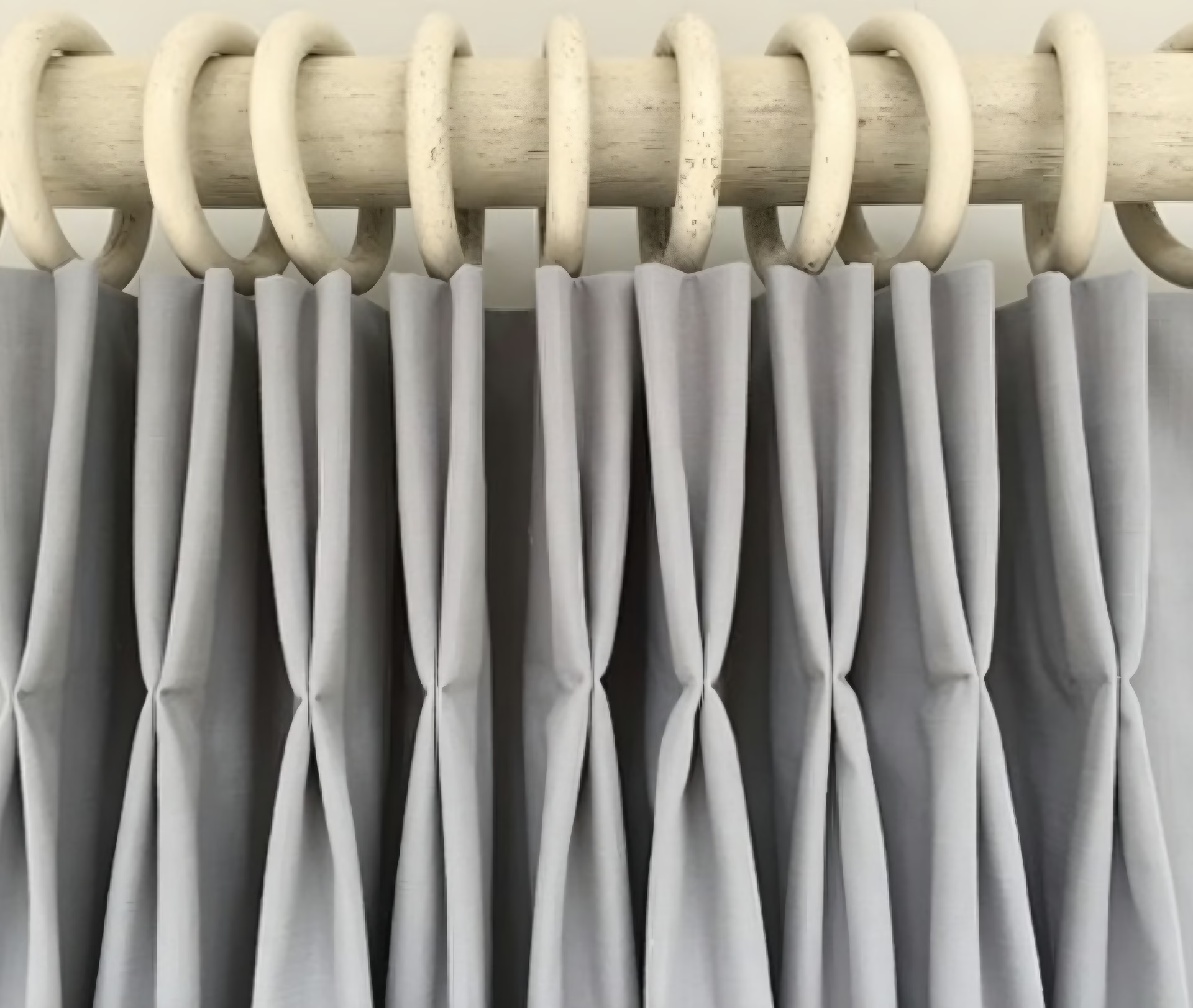
Curtains, lined and interlined
Wave, pinch pleat and eyelet, made in the curtain room and lined and interlined as standard for drape and warmth, measured and hung by the workshop's own team.
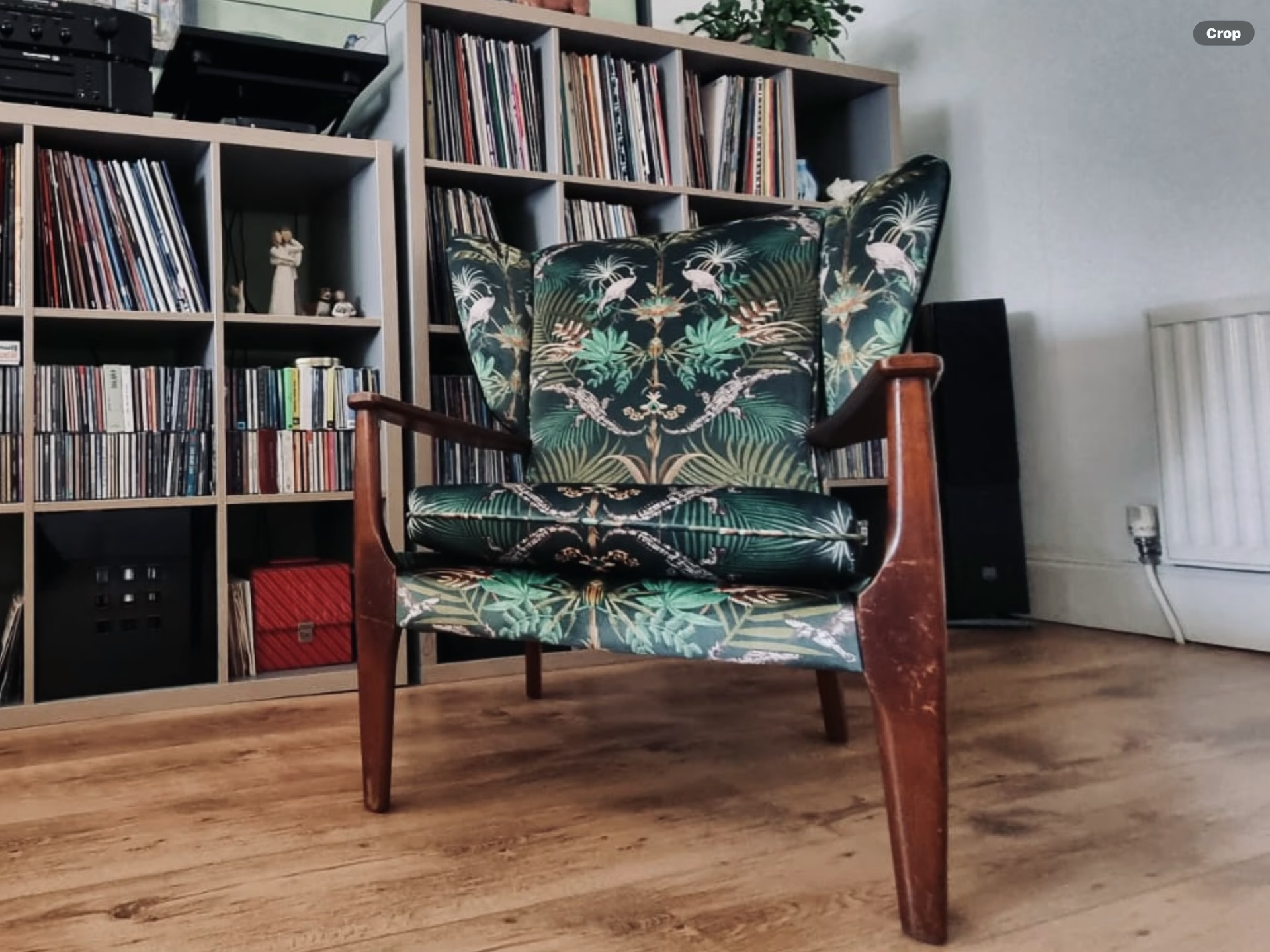
Reupholstery by hand
A tired sofa, chair or set of dining chairs taken back to the bare frame and rebuilt by hand, with hand-tied springs, fibre and horsehair, for another twenty years of use.
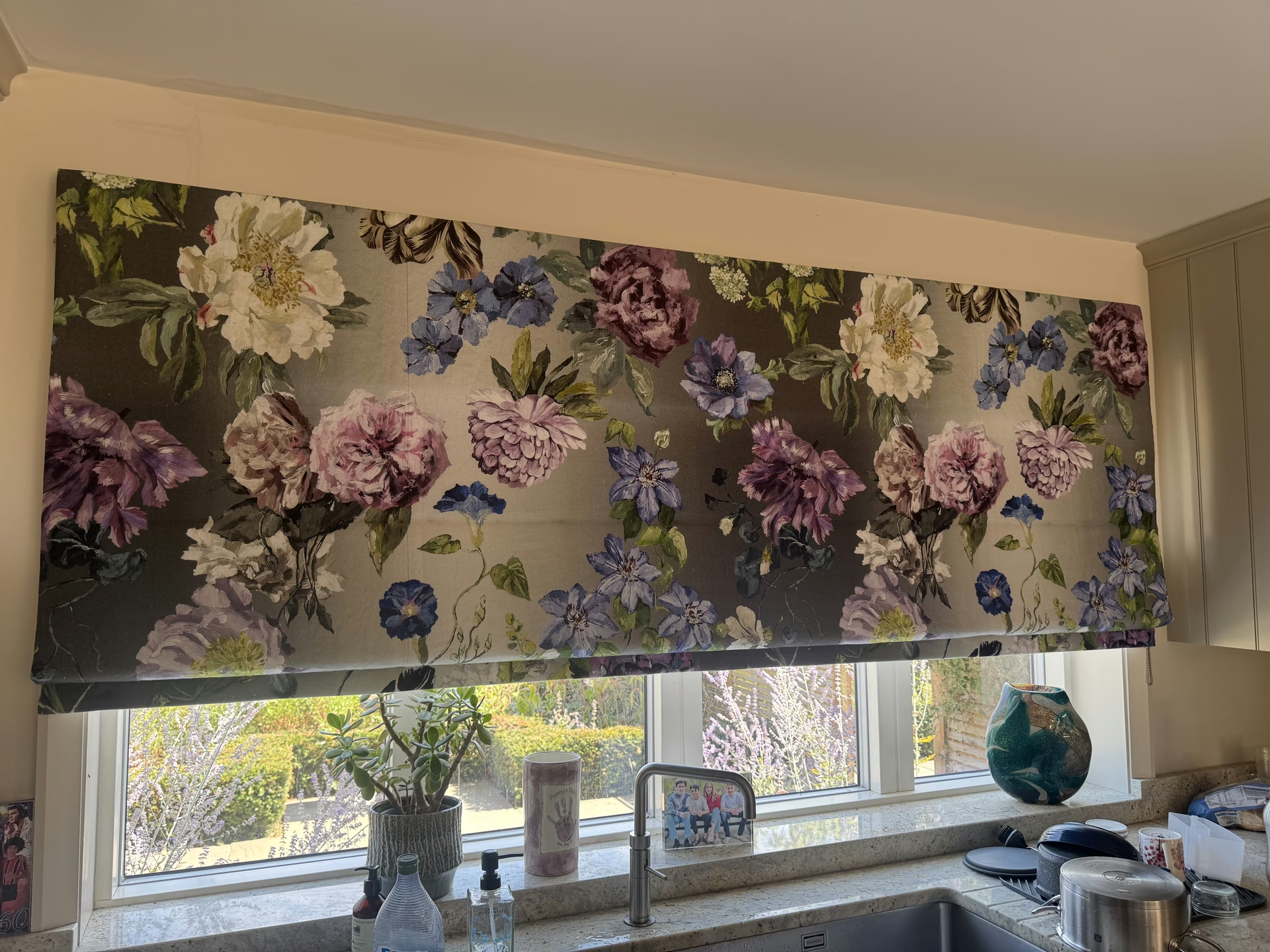
Blinds made to the reveal
Roman blinds made in the workshop, the fabric checked by two makers before a single cut. They suit a low, beamed room where a full curtain crowds the glass. Roller and venetian blinds are fitted by the team.
The drive from the workshop to Suffolk
Measured by car from Unit F, Stock Chase, Heybridge on 13 October 2026.
- Bures: 19 miles, about 33 minutes
- Nayland: 22 miles, about 35 minutes
- East Bergholt: 27 miles, about 35 minutes
- Sudbury: 25 miles, about 41 minutes
- Hadleigh: 31 miles, about 44 minutes
- Long Melford: 28 miles, about 45 minutes
- Ipswich: 34 miles, about 47 minutes
- Lavenham: 31 miles, about 52 minutes
- Felixstowe: 44 miles, about 56 minutes
- Woodbridge: 45 miles, about 58 minutes
What it costs for a Suffolk home
Reupholstery comes in at about what a new piece of similar quality would cost. There is no fixed list, because a wing chair and a run of six dining chairs are entirely different jobs.
Send a photograph and a few words, and you will have a personal reply quoting the work on an average price fabric. Once the quote is approved, an appointment can be at the Heybridge showroom or in your own home.
The roads into Suffolk
Sudbury is 25 miles, about 41 minutes from the workshop at Heybridge, as driven. The fainter lines are the Essex towns we work in.
Places near Suffolk
Colchester
19 miles, about 29 minutes from the workshop
An old cloth town of houses read by their age, each window its own measure.
Braintree
13 miles, about 26 minutes from the workshop
The silk town, where silk still earns its place on the right window at home.
Witham
6 miles, about 12 minutes from the workshop
Silver End and its Crittall steel windows ask for dressing hung clear of the glass.
Send a photograph of the window or the piece
A picture and a few words about the room is enough for a personal reply with a quote.
Questions, answered.
Yes, across the south of the county. The workshop is in Heybridge, near Maldon in Essex, over the Stour from Suffolk. Reupholstery, curtains, blinds and shutters are made by the workshop's own team, and measured and fitted by them, so the drive changes nothing about how the work is done.
The workshop and showroom are at Unit F, Stock Chase, Heybridge, Maldon CM9 4AA. Sudbury is about 25 miles and about 41 minutes away by car. Ipswich is about 34 miles and about 47 minutes along the A12 past Colchester.
Yes. An opening in an old timber-framed house is often wider at the top than the foot, and the floor below it slopes. Our fitter measures each reveal on its own, and we hang to the eye so the drop reads straight against a crooked frame rather than to the spirit level alone.
A roman blind. Where a beam runs close above the glass there is no height for a pole and no wall to stack a curtain onto. A blind set close under the beam shows a pattern well and clears the opening. Ours are made in the workshop, lined and interlined.
Yes. We hold the Gainsborough Silk books in the pattern-book room at the workshop in Heybridge, so you can come and turn the pages, or we can bring the books to you. They are not in the online fabric finder. It is not a cheap cloth, and it rewards the time spent choosing.
It can be, with care. Silk fades and rots in strong sun, so for curtains it is lined and interlined to protect it. It suits a quiet chair or a bedroom rather than a family sofa or a south-facing room in constant light, where a sturdier weave serves better.
Yes. Older furniture usually has the best frames. We strip the piece back to the wood and rebuild it with traditional methods and materials: hand-tied springs, fibre and horsehair. This keeps the chair true to its age and gives it many more years of use.
Yes. A listed house wants fixings made with care, into oak and plaster that have settled over centuries. We have made curtains, pelmets and blinds for the fifteenth-century Moot Hall in Maldon, a building of much the same age.